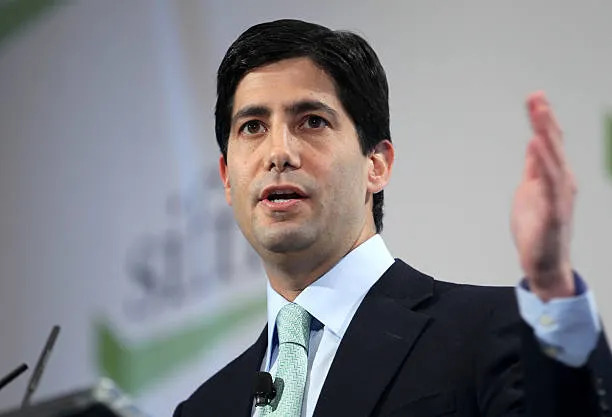
USA President Trump has named Kevin Warsh the new Chair of the U.S. Federal Reserve, succeeding Jerome Powell when his term ends in May 2026. Warsh, 55, is no stranger to the institution; he served as a governor from 2006 to 2011, becoming the youngest ever appointed to the role. During the 2008 financial crisis, he acted as the Fed’s key contact to Wall Street, earning a reputation as a sharp communicator and market-competent policymaker.
The announcement was made in Washington on January 30, 2026, by President Donald Trump, who has long criticized Powell for not cutting interest rates aggressively enough. Trump’s choice of Warsh signals his desire for a central bank that is more responsive to political priorities, particularly on lowering borrowing costs to incentivize growth. Yet Warsh’s track record suggests a more cautious approach. He has often warned against relying too heavily on backward-looking data and has made his concerns known about inflation, positioning him as a hawk in past debates.
Warsh’s nomination still has to be confirmed by the Senate, but his appointment would mark a significant shift in leadership at a time when Americans are struggling with the cost of living, debt burdens, and questions about the fate of the economy and its stability. For households, the Fed’s decisions directly affect mortgage rates, credit card interest, and job markets. For businesses, they shape investment strategies and global competitiveness.
The expectations surrounding Warsh are complicated. Trump hopes for swift rate cuts to boost the economy ahead of the election cycle, while markets anticipate a steadier hand focused on inflation control. This tension sets the stage for a potentially delicate relationship between the White House and the Fed. Warsh’s challenge will be to balance political pressure with the Fed’s mandate of independence, convincing Americans that the institution serves both Main Street and Wall Street.
For readers unfamiliar with him, Warsh’s story is one of return and reinvention. Starting from Albany, New York, to Stanford and Harvard, to Morgan Stanley and the Bush White House, his career encompassed finance, law, and policy. His marriage to Jane Lauder ties him to one of America’s most prominent business families, but his new role places him squarely in the public eye. As he prepares to take the wheel, the question is not only how he will guide monetary policy, but how his leadership will resonate with ordinary Americans whose daily lives are shaped by the Fed’s decisions.