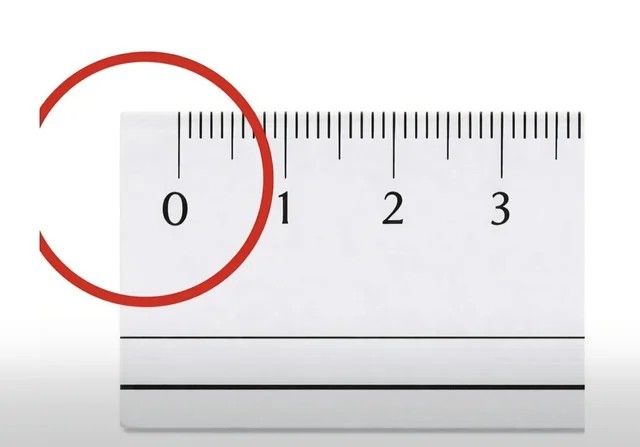
It is something most people have seen but rarely question. On a ruler, just before the zero mark, there is a small space. At first, it looks like a mistake. Some may even think the ruler is faulty. But that tiny gap has a clear purpose, one that helps keep measurements accurate.
In classrooms, students often place the edge of a ruler against what they want to measure. It seems natural. The edge looks like the starting point. But teachers usually correct this and remind them to start from the zero mark. That instruction is not random. It is based on how rulers are designed.
The edge of a ruler is the part that gets damaged most easily. It can chip, bend or wear down after being used for a long time. When that happens, it no longer gives a true starting point. Even a small dent can affect the final measurement. If the zero mark was placed exactly at the edge, every small damage would lead to wrong results.
The space before zero solves this problem. It creates a safe margin between the edge and the first marking. This means that even if the edge is not perfect, the measurement can still be trusted. It is a simple idea, but a very important one.
In workshops and tailoring shops, this detail matters a lot. A carpenter cutting wood or a tailor measuring fabric cannot afford mistakes. A small error can waste materials or spoil the final product. That is why many skilled workers never rely on the edge. They go straight to the zero mark, or sometimes start from another number and adjust their answer.
This design also helps rulers last longer. Instead of becoming useless when the edge wears out, the tool remains reliable. It continues to serve its purpose even after years of use.
The small space before zero may not attract attention, but it plays a big role. It protects accuracy and builds trust in something people use every day.
In the end, the ruler teaches a simple lesson. Small details matter. What looks like an empty space is actually a careful choice, one that ensures every measurement counts.