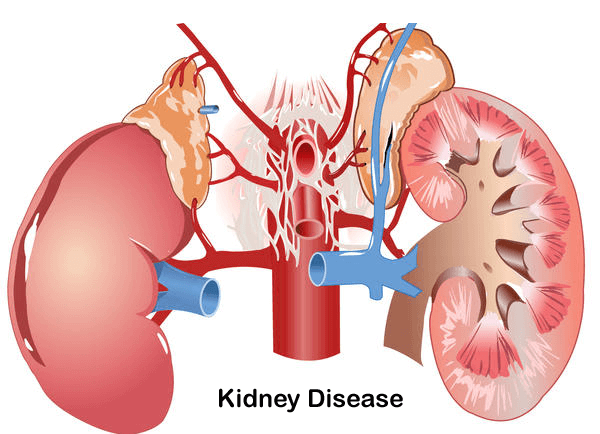
The recent report from the Kenya Ministry of Health shows that approximately 3.1 million Kenyans are living with Chronic Kidney Disease (CKD), a growing public health concern largely driven by the rising prevalence of non-communicable diseases (NCDs) such as hypertension and diabetes. The Cabinet Secretary for Health, Hon. Aden Duale, said NCDs currently account for about 43 per cent of all deaths in Kenya, underscoring the need to strengthen the prevention, early diagnosis, and management of kidney disease.
Chronic kidney disease (CKD) occurs when the kidneys are damaged for several months or longer. The kidneys play a vital role in filtering waste and excess fluid from the blood, regulating blood pressure, balancing salts and minerals, producing red blood cells, and maintaining strong bones. In the early stages of CKD, people often experience no symptoms, making the condition difficult to detect until it has advanced.
Healthcare professionals can diagnose CKD through blood and urine tests that check for high levels of waste products in the blood or abnormalities such as protein or trace blood in the urine. Imaging tests like ultrasounds or CT scans may also be used to examine the kidneys for structural problems.
The main goal of CKD treatment is to slow the progression of kidney damage, often by addressing the underlying cause. However, even with treatment, kidney damage can continue to worsen. If CKD advances to end-stage kidney failure, it can be fatal without interventions such as dialysis, which performs the kidneys’ functions, or a kidney transplant.
Chronic kidney disease symptoms tend to develop slowly over time, as a result of loss of kidney function, which build up of fluids or waste in the body. People with kidney disease show no signs till the last stage, when it is advanced.
Some of the risk factors associated with CDK include old age, frequent use of kidney-damaging medicines, smoking, diabetes and high blood pressure.
Chronic kidney disease is an emerging health concern in Kenya due to increasing rates of hypertension, diabetes, and other risk factors. Early detection remains a challenge because many patients do not show symptoms until the disease is advanced. Raising awareness, improving access to diagnostic tests, and providing timely treatment are crucial to reducing the burden of CKD and preventing progression to kidney failure.