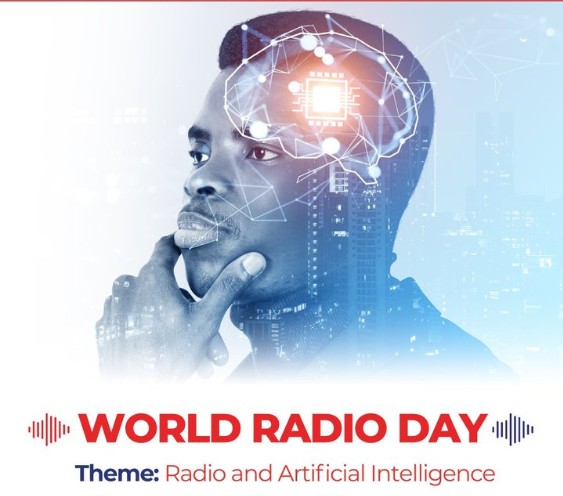
Today, February 13, 2026, marks World Radio Day. This year’s theme, “Radio and Artificial Intelligence: AI is a tool, not a voice,” strikes at the heart of a paradox. For over a century, radio has been the world’s most trusted medium because of its human-to-human intimacy. But, as generative AI begins to script, voice and even host programs, that sacred bond of trust is under unprecedented pressure.
While AI offers dazzling efficiency, the transition from carbon-based broadcasters to silicon-based algorithms risks hollowing out the very credibility that kept radio relevant when television and the internet threatened to eclipse it.
The primary threat to trust is the synthetic host’s deception. Radio is a companion medium where we listen to hosts we feel we know. When a station replaces a local personality with an AI clone, capable of mimicking the cadence, warmth and even the local slang of a human, without clear disclosure, it crosses an ethical line. If a listener discovers the “person” they have been laughing with during their morning commute is actually a sophisticated math equation, the sense of betrayal is profound. In the AI era, transparency is the new currency of trust. Without it, the theatre of the mind becomes a hall of mirrors.
Trust in news and talk radio is often built in the margins; the unscripted moments, the slight crack in a reporter’s voice during a tragedy or the thoughtful silence before a difficult interview question. AI is designed for optimization and the removal of friction. It does not stumble, it does not hesitate and it does not truly feel. By smoothing out these human imperfections, AI-generated content can feel uncanny or sterile. Listeners instinctively trust the raw over the processed and the perfect delivery of an algorithm can create a subtle but persistent credibility gap.
Furthermore, we are currently navigating a post-truth landscape where deepfakes are becoming indistinguishable from reality. Radio’s greatest strength is its immediacy, but in the AI era, that speed is a double-edged sword. If newsrooms rely too heavily on AI for research and scriptwriting, they risk broadcasting factual errors generated by AI models that sound authoritative but are entirely false. The ease with which malicious actors can spoof a trusted broadcaster’s voice means radio stations must now implement rigorous human-in-the-loop verification processes. One unverified, AI-generated “emergency broadcast” could destroy a station’s reputation overnight.
For radio to survive the AI revolution, it must lean into what machines cannot replicate that is lived experience. UNESCO’s slogan for 2026, “AI is a tool, not a voice,” is a necessary theme. AI should be used to transcribe archives, translate broadcasts for minority languages and assist in data-heavy investigative journalism. But the microphone must remain a human domain.
The stations that will thrive are those that are radically honest about their tech. They will use AI to handle the noise, so their human creators have more time for the signal, the empathy, the local connection and the accountability that a machine, no matter how well-trained, can never truly possess. On this World Radio Day, let’s celebrate the technology, but let’s protect the soul of the airwaves. Trust is built by people, for people. Let’s keep it that way.