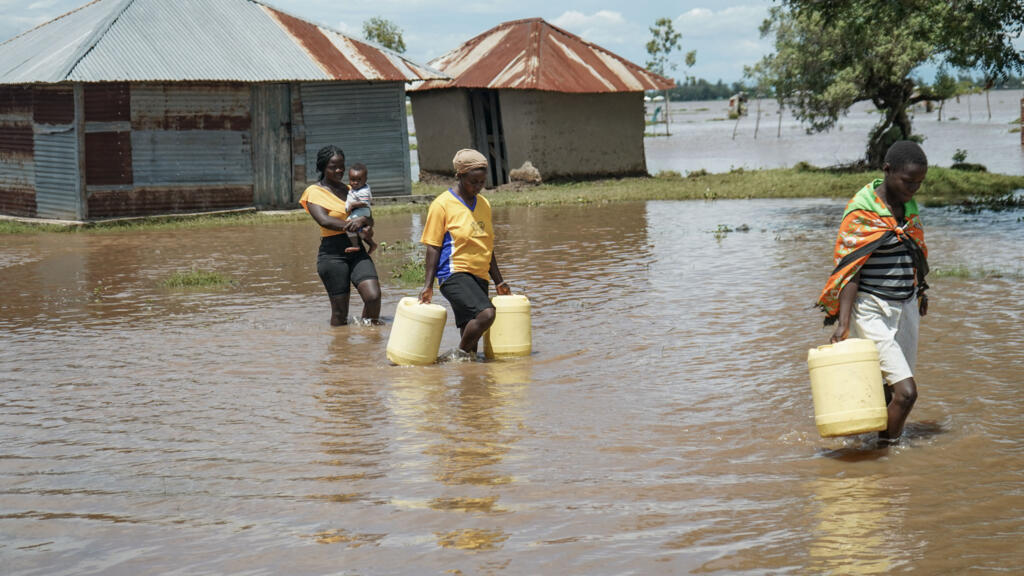
Heavy rains being experienced across many parts of Kenya have caused severe flooding, leaving many families homeless and destroying property worth thousands of shillings. Rivers have burst their banks while drainage systems in towns and villages have been overwhelmed by the large amount of rainwater. The floods have disrupted daily life as homes, farms, and roads continue to be affected by the rising water levels.
Over the past few days, the persistent rainfall has created a dangerous situation in many regions of the country. What started as normal seasonal rain soon turned into a disaster as water levels rose rapidly and spread into residential areas. Many residents were caught unprepared as floodwaters began entering their homes, forcing them to quickly move to safer places.
In several villages, families woke up during the night only to find water already inside their houses. With little time to react, many people could not save their belongings. Furniture, mattresses, food supplies, and electronic items were destroyed as water flooded their homes. Some houses, especially those built with mud or weak building materials, collapsed after being weakened by the heavy rain and strong water currents.
Residents say the force of the floodwaters has been frightening. Fast-moving water has swept through villages carrying away household items such as cooking utensils, clothes, and farming tools. In some areas, livestock including goats, sheep, and cows were also carried away by the strong water currents. For many families who depend on livestock as their main source of income, the loss has been devastating.
In some unfortunate incidents, people have been carried away by the powerful floodwaters while attempting to cross rivers or flooded roads. Witnesses say the water currents were too strong for victims to escape. Authorities have continued to warn residents to avoid crossing flooded areas, emphasizing that even shallow-looking water can be extremely dangerous.
Transport has also been heavily disrupted as several roads have been damaged or completely cut off by the floods. Some bridges have been submerged, making it impossible for vehicles and pedestrians to pass. Public transport in some towns has been affected as vehicles struggle to move through flooded streets. This has made it difficult for people to travel to work, school, or markets.
Farmers have suffered huge losses as floodwaters destroyed crops that were nearly ready for harvest. Farms planted with maize, beans, vegetables, and other produce have been submerged under water. Many farmers say they invested a lot of time and resources into their farms, only to see their efforts washed away within hours.
The flooding has also raised concerns among health officials. Stagnant water left behind by floods can create breeding grounds for mosquitoes, increasing the risk of diseases such as Malaria. Contaminated water sources may also lead to outbreaks of waterborne diseases including Cholera and Typhoid Fever if proper sanitation measures are not taken.
Government agencies together with humanitarian organizations have started responding to the crisis. Emergency teams have been deployed to assist families trapped in flooded areas. Rescue operations are ongoing in some regions where people were stranded after water levels rose suddenly.
Temporary shelters have been established in schools, churches, and community centers to provide accommodation for displaced families. Relief supplies such as food, clean drinking water, blankets, and medical assistance are being distributed to those affected by the floods.
Community members have also come together to support each other during this difficult time. Volunteers have been helping to rescue stranded residents, move families to safer locations, and distribute essential supplies to those in need.
Environmental experts say the increasing frequency of floods in recent years may be linked to several factors including climate change, poor drainage systems, and deforestation. When trees are cut down, the soil loses its ability to absorb water effectively, causing rainwater to flow quickly into rivers and streams.
Rapid urban development without proper planning has also contributed to the flooding problem. Buildings constructed along drainage paths block the natural flow of water, forcing it into residential areas during heavy rains. Experts are therefore calling for improved drainage systems, better urban planning, and increased tree planting to reduce the risk of flooding in the future.
Authorities continue to monitor the situation closely as the rainy season continues across Kenya. Residents living in flood-prone areas have been advised to move to safer locations and avoid crossing flooded rivers or roads.
For many families affected by the disaster, the road to recovery will not be easy. Homes have been destroyed, crops have been lost, and livelihoods have been disrupted. Despite these challenges, communities remain hopeful that government assistance and humanitarian support will help them rebuild their lives and recover from the devastating effects of the floods