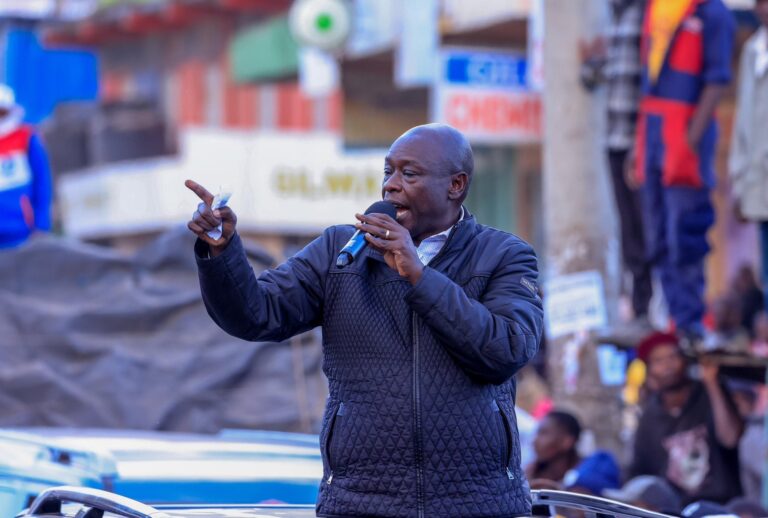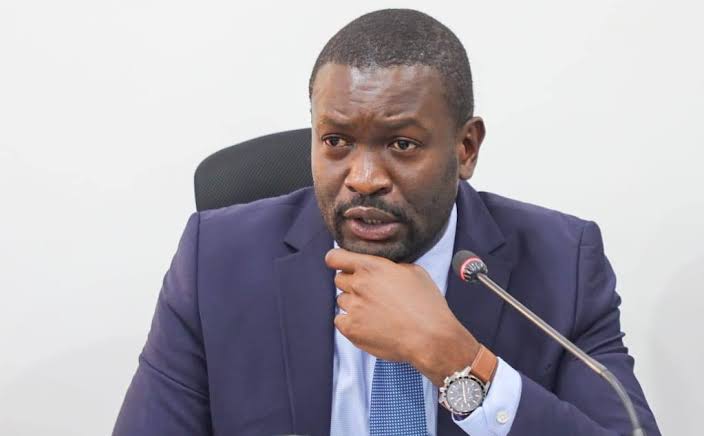
A new TIFA opinion poll has revealed a significant shift in support within the Orange Democratic Movement (ODM), with the Edwin Sifuna-led Linda Mwananchi faction commanding 74% of support among ODM supporters, compared with 20% for the Oburu Oginga-led Linda Ground faction.
The findings, based on a survey conducted between June 13 and June 22, 2026, point to a widening divide over the direction of Kenya’s opposition politics and the future relationship between ODM and the broad-based government arrangement.
The latest figures represent an increase in support for Linda Mwananchi from the 73% recorded in an earlier TIFA survey, while support for Linda Ground has fallen from 24% to 20%. The results place the Sifuna-aligned faction firmly ahead among ODM supporters as political parties begin positioning themselves ahead of the 2027 General Election.
Linda Mwananchi Takes Clear Lead Among ODM Supporters
According to the latest TIFA findings, Linda Mwananchi enjoys a commanding lead over Linda Ground across the country.
The faction associated with Nairobi Senator Edwin Sifuna, Siaya Governor James Orengo and Embakasi East MP Babu Owino received 74% backing among ODM supporters. The rival Linda Ground faction, associated with ODM leader Oburu Oginga, attracted 20% support.
The results indicate that the contest between the two political camps is no longer confined to party leadership structures. Instead, it has become a broader debate among ODM supporters about the party’s political identity, its role in opposition politics and its approach to cooperation with the government.
The poll’s findings also suggest that the Sifuna-led faction has been able to build support beyond traditional ODM strongholds, posting substantial backing in several regions.
Regional Support for Linda Mwananchi
The regional figures contained in the survey show a particularly strong performance for Linda Mwananchi:
| Region | Linda Mwananchi | Linda Ground |
| Lower Eastern | 100% | 0% |
| Mt. Kenya | 89% | — |
| Western Kenya | 89% | — |
| Central Rift | 87% | — |
| Nairobi | 79% | — |
| Nyanza | 58% | 40% |
The figures show that Linda Mwananchi leads in every region highlighted by the poll. Its strongest reported performance is in Lower Eastern, where it recorded 100% support, while it also registered high levels of backing in Mt. Kenya, Western Kenya, Central Rift and Nairobi.
Nyanza remains the most competitive region between the two factions. Linda Ground recorded its strongest regional performance there at 40%, but Linda Mwananchi still maintained a lead with 58%.
The regional pattern is significant because it suggests that the internal ODM contest is increasingly being shaped by national political questions rather than by traditional party loyalties alone.
Why the Linda Mwananchi Faction Is Gaining Ground
The TIFA findings point to a clear political divide over how ODM should position itself in relation to the government.
Linda Mwananchi has been associated with a more independent opposition posture, while Linda Ground has been linked to the broad-based government arrangement. The latest polling therefore appears to show that a larger proportion of ODM supporters currently favour a party that maintains a stronger distance from the administration.
This political difference has become one of the central issues in the ongoing debate over ODM’s future.
The poll found that 52% of Kenyans oppose the broad-based government arrangement, compared with 30% who support it. TIFA’s tracking of public opinion from May 2025 through June 2026 also indicates that support for the arrangement has generally remained around the 30% mark.
The findings suggest that dissatisfaction with the political arrangement may be influencing attitudes within ODM and contributing to the growing popularity of the Linda Mwananchi position.
Broad-Based Government Support Remains Uneven Across Kenya
Support for the broad-based government arrangement varies considerably from one region to another.
The Central Rift recorded the highest level of support at 47%, followed by Northern Kenya at 43% and Nyanza at 35%. However, even in these regions, opposition to the arrangement remains substantial.
The weakest support was recorded in Mt. Kenya at 13%. Nairobi followed at 22%, while the South Rift recorded 25% support.
The latest figures also demonstrate how public opinion has shifted over time in some parts of the country.
In the Central Rift, support rose from 32% in May 2026 but remained below the 60% recorded in November 2025. Northern Kenya’s support declined from 58% in May and 61% in November 2025 to 43% in the latest survey.
Nyanza also recorded a decline, with support falling from 49% in May and 59% in November 2025 to 35%.
The pattern indicates that public attitudes toward the broad-based government arrangement remain fluid as Kenya moves closer to the 2027 electoral cycle.
ODM Emerges as Kenya’s Most Popular Political Party
The TIFA survey also placed ODM at the top of the national political party popularity rankings.
ODM received 20% support, placing it ahead of the United Democratic Alliance (UDA), which recorded 17%.
The Democratic Congress Party (DCP) followed with 12%, while Jubilee recorded 10% and Wiper received 7%. At the same time, 28% of respondents said they did not identify with any political party.
The figures present an important political contradiction.
While ODM remains the most popular individual political party in the survey, a substantial share of respondents do not identify with any party. This suggests that party popularity should not necessarily be interpreted as guaranteed electoral loyalty.
The 28% figure could also indicate a growing pool of voters who may be influenced by individual candidates, policy issues, political alliances or campaign developments as the 2027 election approaches.
Edwin Sifuna’s Growing National Political Profile
The latest poll also places Edwin Sifuna at the centre of Kenya’s emerging opposition politics.
According to the findings, President William Ruto remains the most preferred presidential candidate with 24% support. Sifuna, however, has risen to second place among the candidates measured, with 15%, followed by former Cabinet Secretary Fred Matiang’i at 14% and Wiper leader Kalonzo Musyoka at 13%.
Sifuna’s performance is notable because his growing national profile appears to coincide with his increasingly prominent role in the Linda Mwananchi faction.
Earlier TIFA findings in May placed Sifuna at 10% in the national presidential preference race, meaning the latest survey represents a notable increase in his reported support.
The regional picture also highlights different political strongholds. Ruto continues to perform strongly in Central Rift and Northern Kenya, while Sifuna performs particularly well in Nairobi and Western Kenya. Kalonzo retains significant support in Lower Eastern, while Matiang’i draws stronger backing from Nyanza and parts of Mt. Kenya.
2027 Presidential Race Remains Open
The TIFA findings suggest that Kenya’s 2027 presidential contest remains highly competitive.
Although Ruto leads the latest preference rankings at 24%, the combined figures for the leading opposition figures demonstrate that no single challenger has established an overwhelming national advantage.
Sifuna’s rise to 15%, Matiang’i’s 14% and Kalonzo’s 13% illustrate the fragmented nature of the opposition landscape.
This fragmentation is particularly important because the poll also found that 62% of opposition supporters believe political unity should come before individual ambitions. A majority reportedly believe that a single united opposition candidate would have the strongest chance of defeating President Ruto in 2027.
The findings therefore place two competing dynamics at the centre of Kenya’s political debate: the growing popularity of individual opposition figures and the demand among opposition supporters for greater political unity.
What the TIFA Poll Means for ODM
The latest survey could have important implications for ODM’s political strategy.
First, the strong performance of Linda Mwananchi suggests that a significant proportion of ODM supporters favour a more independent opposition posture. This could increase pressure on the party to clarify its position on cooperation with the government.
Second, the results indicate that the internal ODM contest is becoming increasingly connected to the wider 2027 presidential race. The faction that succeeds in shaping the party’s direction could potentially influence ODM’s future alliances and its position within the broader opposition landscape.
Third, the regional figures show that the political debate extends beyond the party’s traditional base. Strong support for Linda Mwananchi in Nairobi, Western Kenya, Mt. Kenya, Central Rift and Lower Eastern could give the faction a broader national profile.
However, Nyanza remains a critical political battleground. Linda Ground’s strongest showing in the region demonstrates that the contest remains particularly relevant in ODM’s traditional heartland.
Linda Mwananchi vs Linda Ground: The Key Differences
The political divide can broadly be understood through two competing approaches to ODM’s future.
| Issue | Linda Mwananchi | Linda Ground |
| Political orientation | Independent opposition | Cooperation with government |
| Key association | Edwin Sifuna and allies | Oburu Oginga and allies |
| Latest ODM support | 74% | 20% |
| Strongest reported regional position | Lower Eastern and several other regions | Nyanza |
| Broad-based government | Opposed | Supportive |
| Political focus | Accountability and independent opposition | Engagement and cooperation |
The distinction between the two camps is particularly relevant as political parties prepare for the 2027 election.
The TIFA figures indicate that the disagreement is not simply about personalities. It reflects competing visions of whether ODM should remain an independent opposition force or participate in a broader political arrangement with the government.
Mermaid Diagram: ODM Faction Support According to the TIFA Poll
What Comes Next for ODM?
The latest TIFA poll is likely to intensify debate over the future direction of ODM.
With Linda Mwananchi commanding 74% support among ODM supporters, the figures give the faction significant political momentum. However, the 20% support recorded by Linda Ground means that a sizeable minority of ODM supporters still favour the alternative approach.
The biggest question will be whether the two sides can find common ground before the 2027 General Election.
The poll’s finding that 62% of opposition supporters prioritise unity over individual ambitions adds another layer to the debate. While the figures point to strong support for Sifuna’s faction within ODM, they also suggest that opposition voters may ultimately prioritise electoral cooperation over internal party competition.
This creates a strategic challenge for ODM and the wider opposition. Individual politicians may be gaining popularity, but voters appear to be increasingly interested in whether opposition leaders can coordinate around a credible national political strategy.
Conclusion
The latest TIFA poll has placed the Sifuna-led Linda Mwananchi faction firmly ahead in the internal ODM popularity contest, with 74% support compared with 20% for the Oburu Oginga-linked Linda Ground faction.
The results also show that the debate over ODM’s future is closely tied to the broader question of Kenya’s opposition politics and the country’s 2027 presidential race.
With ODM ranking as the most popular political party at 20%, Sifuna recording 15% in presidential preference and 52% of respondents opposing the broad-based government arrangement, the political landscape remains highly fluid.
The strongest message from the poll may be the growing demand for political unity. While Linda Mwananchi has established a clear lead within ODM, opposition supporters appear to recognise that fragmented political ambitions could make it harder to mount a competitive challenge in 2027.
As Kenya moves closer to the next General Election, the future of ODM, the relationship between its competing factions and the ability of opposition leaders to forge a united political front will remain among the country’s most closely watched political developments.