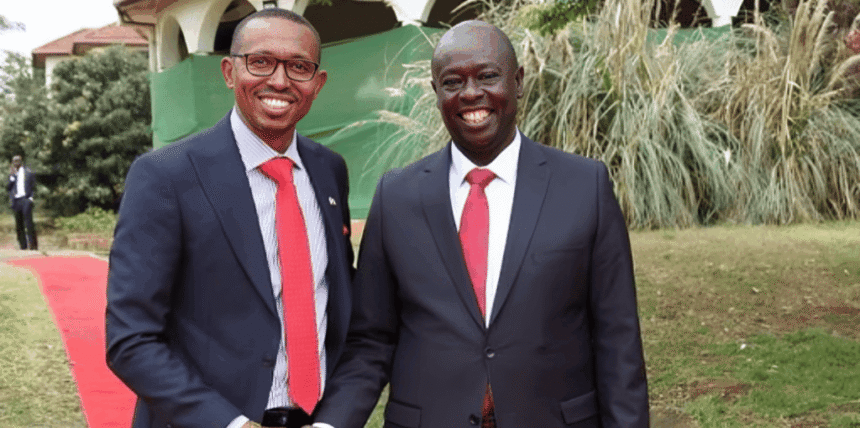
In the shifting landscape of Kenyan politics, few manoeuvres have caused as much of a stir as Nyali MP Mohammed Ali’s break from the ruling United Democratic Alliance (UDA). Known to millions as “Jicho Pevu” for his fearless investigative journalism, Ali has once again embraced his role as a political disruptor, trading his yellow UDA tie for the multi-colored banner of the United Opposition.
The defection, finalised on Sunday during a high-octane rally in Roysambu, Nairobi, is a declaration of war against the status quo in Mombasa. Flanked by opposition heavyweights like Kalonzo Musyoka and former Deputy President Rigathi Gachagua, Ali signalled that the honeymoon between him and President Ruto’s administration is over.
“I was elected as an independent in 2017 because I refused to be a slave to party cartels,” Ali told a cheering crowd. “In UDA, I found the same walls. If you want to serve the people of Mombasa, you cannot be an errand boy for regional kingpins who think they own the Coast.”
The friction within UDA had been building for years. Ali’s relationship with UDA Secretary General Hassan Omar (his likely rival for the Mombasa governorship) had turned toxic. By April 2025, Ali had already boycotted internal party elections, citing a “fixed” process designed to lock him out. His exit leaves UDA without its most popular grassroots mobilizer in the Coast, a region the ruling party has struggled to consolidate.
By joining the United Opposition, Ali has strategically positioned himself as the “outsider” candidate. By running against the incumbent, Abdulswamad Sharrif Nassir, he is running against the entire political establishment of the region. His campaign is built on the narrative of the “hustler” who was betrayed by the “hustler government,” a message that resonates deeply with the youth in Mombasa’s informal settlements.
However, the path ahead is fraught. While Gachagua’s DCP and Musyoka’s Wiper have welcomed him with open arms, Ali has yet to settle on a specific party ticket.