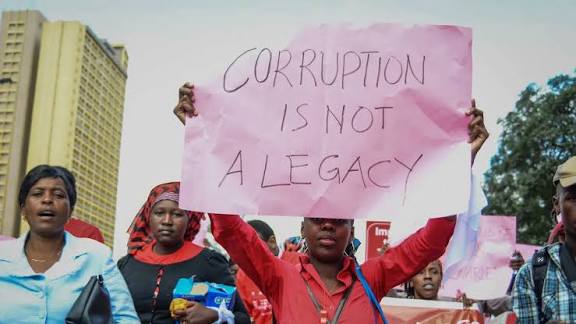
Corruption remains one of the most persistent challenges across many African nations, affecting economic growth, public trust, and institutional development. While many of us quickly blame leaders for corruption, the truth is that corruption is a complicated problem caused by both bad leadership and our behavior as a society. Still, it is important to find out which side causes the bigger problem so we can understand how to fix it.
Many argue that corruption in Africa is primarily a leadership problem. A country’s leaders influence national values. When top officials misuse public funds, engage in bribery, or manipulate institutions for personal gain, it sends a message to the public that it is normal.
In several cases, leaders fail to strengthen key institutions like the judiciary, the police, and anti-corruption agencies. Weak institutions make it easy for corrupt practices to survive because laws cannot be enforced efficiently. We have also seen powerful politicians facing little to no consequences. This creates a culture where public office is seen as a pathway to wealth rather than service.
On the other hand, society has also contributed in several ways. Many citizens view small bribes as normal or necessary for getting services. This daily practice feeds into the larger corruption ecosystem.
Sometimes, politicians who misuse public funds are still elected because they provide handouts during campaigns. During campaigns, the voters expect flour and money from the politicians. Society sometimes values short-term benefits over long-term accountability.
Although both leadership and society play a role in corruption, leadership carries the greater responsibility. This is because leaders have the power to shape how a country is run. They can strengthen or weaken institutions, enforce or ignore laws, and promote transparency or hide important public records. Leaders can also educate and mobilize citizens, as well as set the moral standards that guide the nation. When leaders act responsibly, they influence society to do the same; when they act corruptly, society often follows their example.
A country’s culture often reflects the behaviors of those in authority. When leadership is ethical and credible, society tends to follow. Corruption may seem like a permanent problem, but it can be reduced if both leaders and citizens work together. Leaders must set a good example, while society must hold them accountable. When people refuse to accept corrupt behavior and demand transparency, the cycle of corruption begins to break. With strong leadership and active citizens, a more honest and fair society is possible.