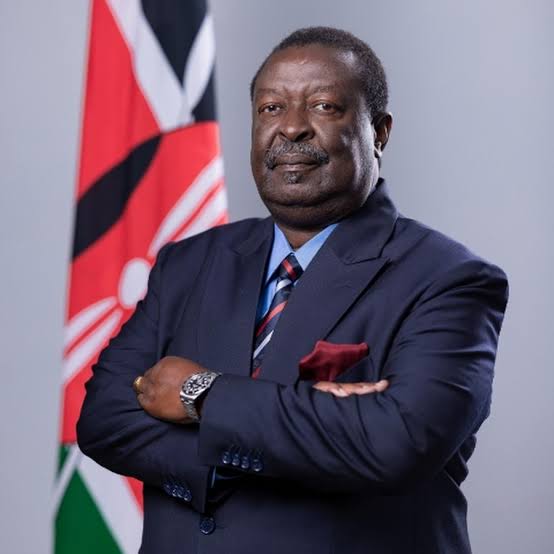
As the 2027 political season slowly gathers heat, one question keeps resurfacing in Western Kenya: is Musalia Mudavadi truly positioned to lead the Luhya nation? His calm demeanor and long tenure in politics often earn him national respect; a closer look, however, reveals deep chinks that weaken his claim to regional leadership.
For a start, Mudavadi walks into 2027 without a solid political vehicle of his own. The ANC party, once considered a potential Luhya power base, was swallowed up in the merger with UDA. No man can claim to lead a bloc whose political direction he does not independently shape when he lacks a distinct party identity to rally a historically fragmented community.
But even more telling is his shrinking home support. In his own county, he lacks a firm grassroots base. The governor is ODM, the senator is ODM, and his area MP sits in UDA-not ANC. This patchwork of loyalties shows that even at the village level, Mudavadi cannot confidently claim to control the political heartbeat of Vihiga. A regional kingpin must command home respect before aspiring to wider influence.
He faces equally serious competition from a rising figure, George Natembeya. Unlike Mudavadi, Natembeya has momentum, a bold public image, and increasing appeal to the youth. He represents what many in Western Kenya feel Mudavadi has never accorded them: assertive leadership and fresh political energy. The contrast between the two is, indeed, getting more striking with each passing day.
Hardest of all, however, is Mudavadi’s long tenure in national politics. With decades in government—vice president, minister, and currently prime cabinet secretary—his track record indicates little tangible economic transformation for the Luhya community: no roads, industries, jobs, or hubs of investment reflecting his influence in the region. To many people, he has been present in politics but has been absent in his impact. For all these reasons, Mudavadi’s preparedness to lead the Luhya nation in 2027 sounds like a myth rather than the truth. Respect for his experience is valid, but above all, there is more to leadership than longevity. It calls for a political base, an agenda, visible results, and influence, which cannot be gainsaid, qualities yet unsteady in his case. The Luhya nation will continue to look for a more decisive and transformative leader until Mudavadi rebuilds his political foundation and proves his value to the community.