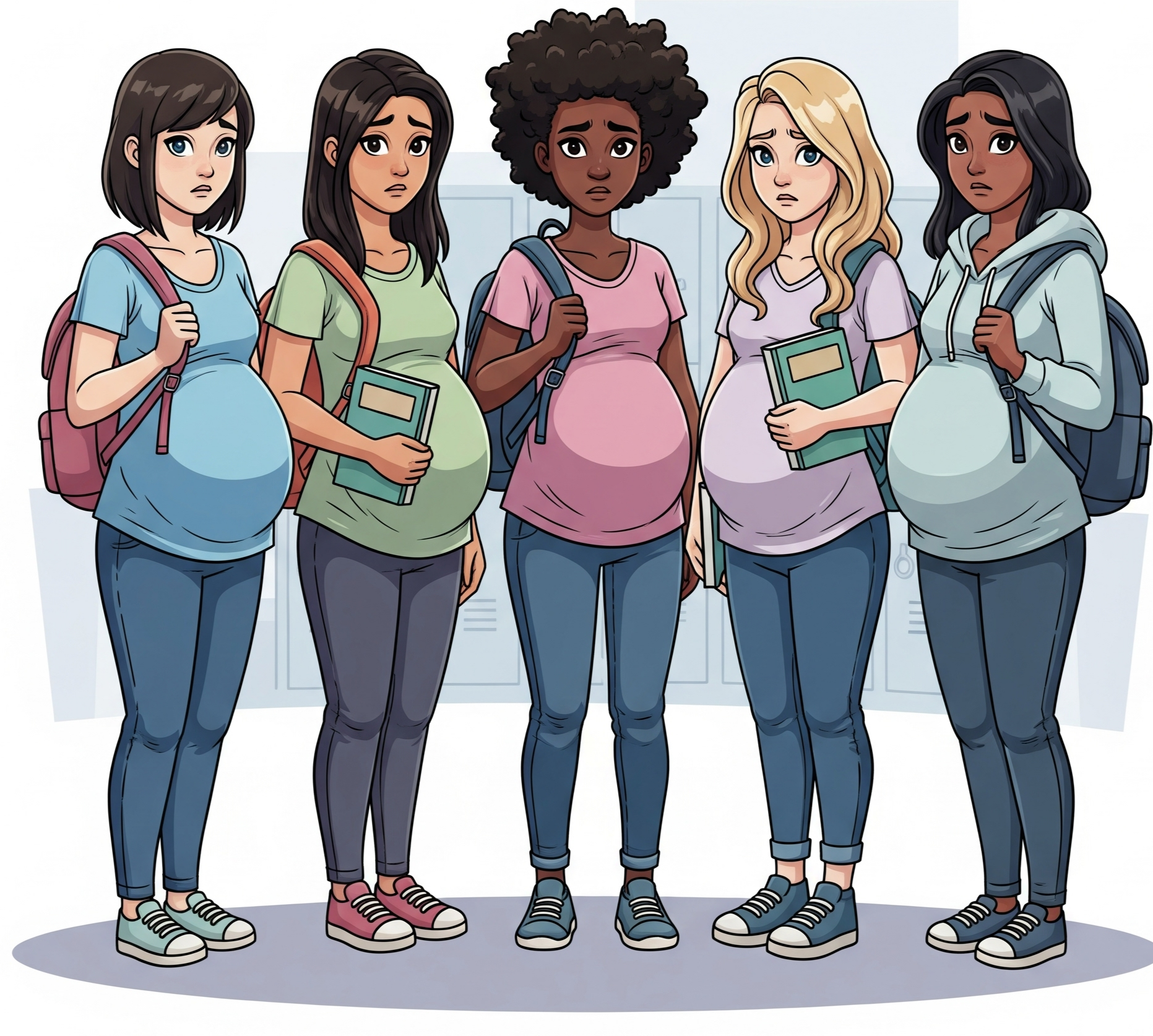
School holidays a time for rest, family bonding and safe growth have quietly become a danger zone for many teenagers in Kenya. Every year, statistics show a disturbing spike in teenage pregnancies immediately after holiday periods. While the country debates curriculum changes, exam pressure and education funding, this crisis unfolds silently in villages, towns and cities. The long breaks meant to refresh students have turned into a window of vulnerability.
One major reason is lack of supervision. Many parents work long hours leaving teenagers alone for most of the day. In an era where smartphones, social media and peer pressure are shaping adolescent behavior, unsupervised time becomes risky. Teenagers have access to information, relationships and influences that can easily push them into situations they are emotionally unprepared for. When guidance is absent curiosity can turn into consequences that last a lifetime.
Economic hardship also plays a painful role. Households struggling to meet basic needs, some girls and boys fall into transactional relationships with older men and women who offer money, gifts or food. Poverty creates a dangerous environment where young school going children are forced to make choices that compromise their future. Holiday periods amplify this vulnerability because the structure and safety that school provides temporarily disappear. Without daily routines, many teenagers get exposed to predators who take advantage of their needs.
The community has equally failed in providing protection. Conversations around sex, consent and reproductive health remain taboo in many households. Parents hope silence will keep their children disciplined yet that silence often pushes them to seek information from the wrong sources. Schools may teach biology but they rarely teach boundaries or self-protection in a realistic and relatable way. As a result, teenagers enter the holiday period informed academically but uninformed emotionally and socially.
If Kenya wants to reduce teenage pregnancies, it must rethink what happens during school breaks. Parents must create open communication channels with their children. Communities must provide safe spaces like youth centers, mentorship programs and holiday activities that keep teens busy and guided. Schools should integrate comprehensive life-skills education that goes beyond textbooks. Most importantly, society must stop blaming teenage girls and start addressing the real roots of the problem poverty, neglect, silence and exploitation.
School holidays should not be seasons of fear for parents or traps for teenagers. They should be safe periods of rest and growth. Until the country confronts the factors making holidays unsafe, the cycle of teenage pregnancy will continue, costing young people their dreams and dimming the nation’s future.