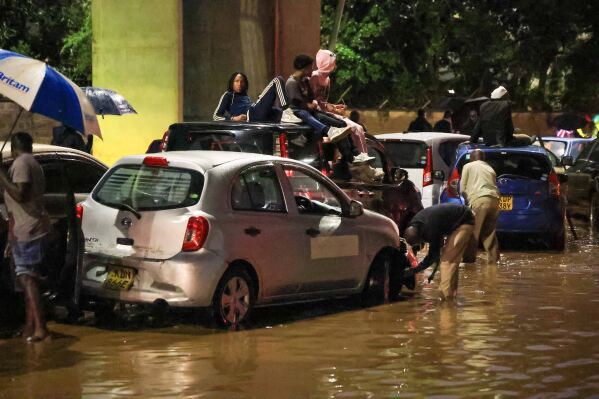
Kenya is confronting one of its most disruptive rainy‑season crises in recent memory, as heavy downpours and flash floods ravage many parts of the country, leaving lives lost, homes destroyed, and communities displaced amid warnings that the wet spell is far from over.
As the long rains continue to pound regions across the nation, intense flooding has claimed at least 25 lives, with the worst devastation felt in Nairobi, where rivers bursting their banks swallowed roads, homes, and vehicles. Authorities in Nairobi retrieved dozens of bodies from flooded rivers in low‑lying estates, while many more residents were forced to flee as water levels surged without warning.
In addition to loss of life, the floods have severely disrupted movement and services. Major transport corridors, including highways and bridges, have been closed due to submerged roads or damage, complicating rescue and relief efforts. Some motorists were stranded for hours as water inundated key city roads, prompting operators of the Nairobi Expressway to briefly open the toll road for free to ease congestion.
The impacts extend beyond urban centres. In western Kenya, the Sondu‑Miriu River burst its banks, submerging hundreds of homes in Homa Bay and displacing families from their communities. Small traders in Migori County recount how floodwaters swept through markets overnight, destroying goods and livelihoods.
Local and national authorities have mobilised a multi‑agency emergency response, with the Kenya Defence Forces, Kenya Red Cross Society, police, and county governments engaged in search, rescue, and relief operations. The government has also released food from strategic reserves and pledged to cover hospital expenses for those injured in the floods.
Officials warn that the rains, driven by the March–May long rains pattern, are expected to continue in many regions, heightening the risk of further flooding, landslides, and water contamination. The Kenya Meteorological Department has urged residents in flood‑prone areas to exercise caution and move to safer ground where necessary.
Health authorities have also sounded alarms about secondary threats emerging from the disaster. With stagnant water and compromised sanitation, experts fear outbreaks of water‑borne and vector‑borne diseases such as cholera and malaria could follow the floods unless preventive measures are taken.
Beyond the immediate humanitarian crisis, the floods expose deeper vulnerabilities in Kenya’s infrastructure and disaster preparedness. Experts have long cautioned that rapid urban growth, blocked drainage channels, and settlement in flood‑prone areas make cities like Nairobi particularly susceptible to rain‑related catastrophes. As the country struggles to respond now, many are already calling for more robust long‑term solutions to protect communities against the recurrence of extreme weather events