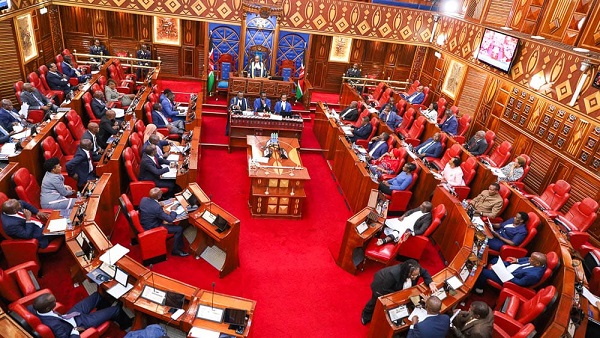
A debate in the Kenyan Senate has brought renewed attention to the challenges facing farmers, as lawmakers discussed a proposed bill aimed at introducing Minimum Guaranteed Returns (MGR) for agricultural producers. The proposal seeks to ensure that farmers receive a minimum price for their produce, protecting them from losses caused by fluctuating markets and natural disasters.
During the session, several senators raised concerns about how the policy would be implemented and who should be responsible for ensuring its success. Senator Edwin Sifuna strongly opposed the idea of placing the responsibility for Minimum Guaranteed Returns solely on county governments.
He argued that the promise of MGR was made at the national level and therefore the national government must play a central role in fulfilling it. According to Sifuna, shifting the burden to counties could undermine the effectiveness of the policy and leave farmers without adequate protection.
He also highlighted the need for better agricultural marketing systems to prevent the loss of farm produce. Sifuna pointed out that farmers often suffer heavy losses due to poor market access and lack of storage facilities. As an example, he mentioned instances where large quantities of mangoes rot because farmers are unable to sell them in time. In his view, guaranteeing minimum returns will only work if the government also improves the systems that connect farmers to markets.
Senator Daniel Manzo supported the bill but framed it as a safety net for farmers facing unpredictable conditions. He described Minimum Guaranteed Returns as a form of insurance that could help protect farmers from calamities such as floods and droughts, which frequently affect agricultural production in the country.
However, Manzo emphasized that compensation alone cannot solve the long-term problems facing the agricultural sector. Instead, he argued that the government should prioritize investment in infrastructure, particularly irrigation and water management projects. According to him, building dams and improving irrigation systems would allow farmers to maintain production even during dry seasons.
He specifically referenced projects like the Thwake Dam, noting that such investments could significantly reduce the risks farmers face. By improving water availability and agricultural infrastructure, the country could strengthen food production and reduce the need for compensation after losses occur. Throughout the debate, senators repeatedly stressed the importance of political accountability. They called on both national and county governments to ensure that promises made to farmers are followed by proper budget allocations and effective implementation.
The discussion reflects broader concerns about the sustainability of Kenya’s agricultural sector, which remains a key pillar of the country’s economy and a primary source of livelihood for millions of citizens. As the bill continues to be debated, lawmakers are expected to examine how the Minimum Guaranteed Returns policy can be structured in a way that truly benefits farmers while strengthening agricultural systems across the country.