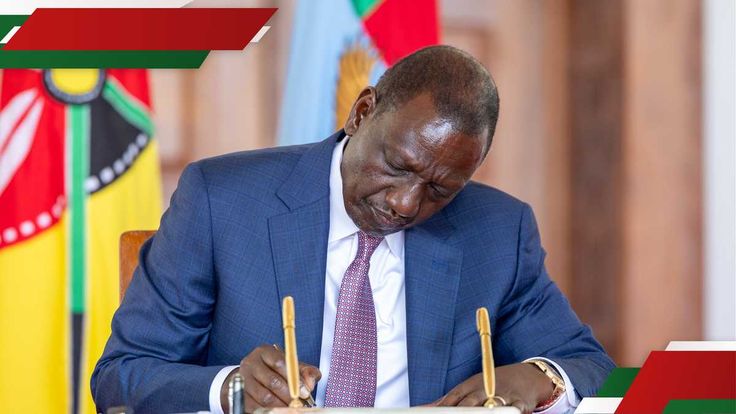
President William Ruto has officially signed the National Infrastructure Fund Bill (National Assembly Bill No. 1 of 2026) into law during a historic ceremony held at State House Nairobi. The signing marks a major step in Kenya’s efforts to finance large-scale infrastructure projects without increasing public debt.
The newly enacted law establishes the National Infrastructure Fund, a special investment vehicle designed to mobilize long-term capital from private investors. Through the fund, the government plans to attract financing from domestic pension funds, sovereign wealth funds and other private sources to support critical development projects across the country.
According to the government, the fund will focus on building and improving strategic national infrastructure. These include major projects such as national highways, railway networks, airports and seaports. By drawing capital from private investors, the initiative aims to reduce the country’s reliance on heavy borrowing and taxation to finance infrastructure development.
The law also outlines a two-tier governance structure to oversee the operations of the fund. This structure will consist of a council responsible for strategic oversight and a board tasked with managing the day-to-day operations and investment decisions of the fund.
Funding for the National Infrastructure Fund will come from several sources. These include proceeds from privatization of government assets and returns generated from investments made by the fund itself. Officials say this model will allow the fund to grow sustainably while continuously supporting new infrastructure projects.
With the presidential assent now complete, the National Infrastructure Fund Act officially becomes part of the laws of the Republic of Kenya, paving the way for its implementation and the mobilization of new capital for the country’s infrastructure agenda.