Across Kenya and the world, women are silently suffering some on hospital beds, others in village homes enduring severe menstrual pain they have been told is normal. Many miss school, work and opportunities, swallowing painkillers and shame while searching for answers. Often dismissed or misunderstood, they live for years without a diagnosis, unaware that their pain could be endometriosis a hidden but growing struggle masked as ordinary womanhood.
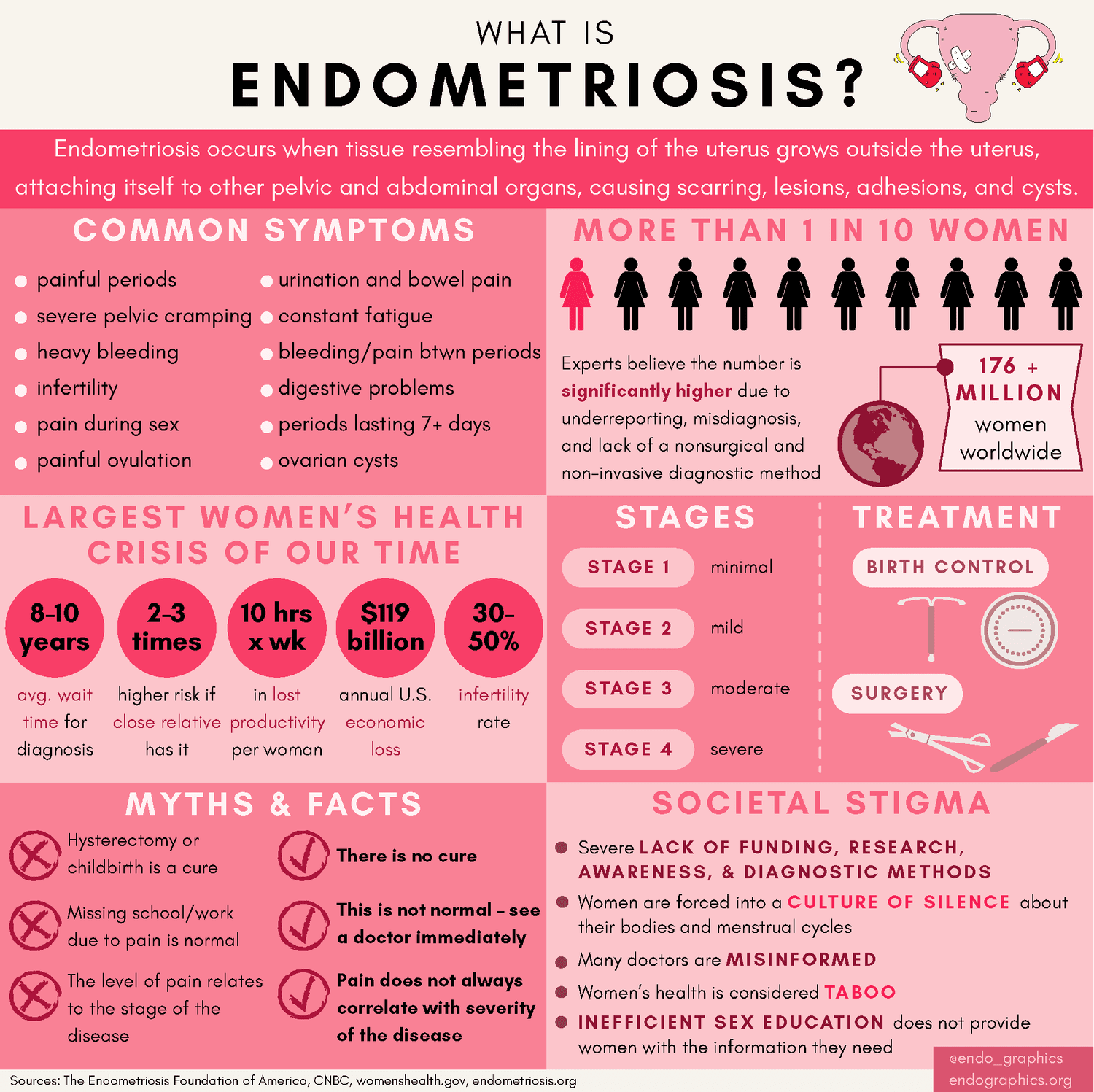
Endometriosis, is a painful condition in which tissues that are similar to the inner lining of the uterus grows outside the uterus. It majorly affects the ovaries, fallopian tubes and the tissues lining the pelvis, it rarely grows beyond the areas where the pelvic organs are located. The disease acts as a lining inside the uterus, thickens, breaks down and bleed with each menstrual cycle. This results to a lot of pain during the menstrual periods.
The main symptoms include, the pelvic pain, related to the menstrual periods, that is usually far worse than usual. Pain with sex, this occurs during or after sexual intercourse. Pain experienced with bowel movement or urination, excessive bleeding and infertility that is found during tests for infertility treatment. There are other symptoms that include nausea, diarrhea that are common before or during menstrual periods.
As of early 2025, an estimated 1.2 to over 2 million women and girls aged 15–49 in Kenya are affected by endometriosis. Often described as a “silent struggle,” the condition affects roughly 1 in 10 women of reproductive age, reflecting global trends, with some estimates ranging between one in six to one in ten women.
A Nairobi-based study found a prevalence of 6.8% to 8.9% among women undergoing laparoscopic surgery. Despite its impact, diagnosis in Kenya takes an average of 7–10 years, resulting in prolonged periods of silent suffering. The condition mainly affects women within the reproductive age bracket of 15 to 49 years.
The main complication that comes with endometriosis is difficulty in getting pregnant, up to half of women with endometriosis have hard time conceiving. This is because, endometriosis developing in the fallopian tube tends to block the egg and the sperm from meeting and fertilizing. There many myths surrounding endometriosis disease such as pregnancy cures endometriosis. The truth is, it’s not actually the cure, while some may feel some temporary relief from pain, others do not and the pain always comes after child birth.
Severe period pain is normal. Truth is, while cramping is normal, severe pain is an indicator of endometriosis. This, among other myths have mislead women, leading to late diagnosis and treatment of the disease. The rise of doctors in Kenya who are gynaecologists and endometriosis specialist have helped create awareness about it, through campaigns in their social media platforms, in effort to combating the disease and restoring dignity among women with endometriosis. Painful period is not normal, endometriosis can be treated.