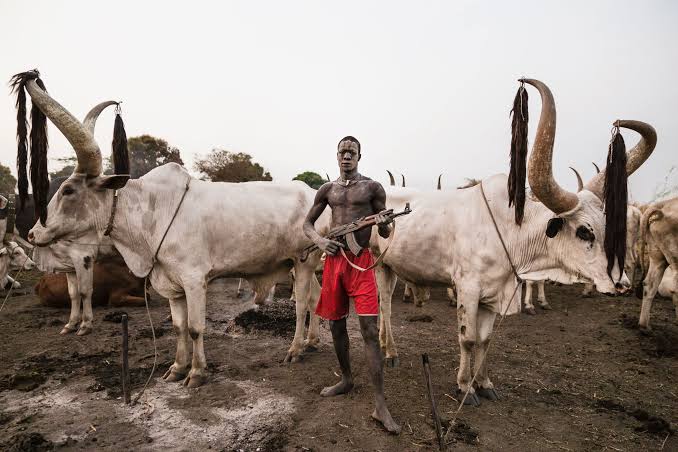
In the dry lands of South Sudan, there lives a cattle-keeping community called the Mundari people, and for them cows are not just animals for food or wealth but are treated like family members because their whole life depends on them for survival, culture, and identity.
The Mundari people bathe in cow urine because they believe it keeps their bodies clean and healthy in a place where clean water and soap are very hard to find, and since cow urine is warm, fresh, and always available, it becomes their natural soap and medicine at the same time.
When a Mundari man or woman wakes up in the morning, they go to their cattle and gently collect fresh cow urine in a small container or directly pour it over their hair and body, and this is done with care and respect because the cow is seen as a blessing that provides what the human being needs to stay alive and strong.
Cow urine is believed to kill bad germs and insects on the skin and hair, and it also removes body smell, which is very important in a hot environment where people sweat a lot and do not have perfumes or modern hygiene products.
The Mundari also mix cow urine with ash from burned cow dung, and this mixture is rubbed on the skin and hair to protect the body from mosquitoes and flies that bring diseases, and this same mixture makes their hair turn orange or reddish in color, which is considered beautiful and a sign of pride in their culture.
For the Mundari people, bathing in cow urine is not something dirty or shameful, but something normal and respected, because they believe that the cow gives life just like a mother gives life to a child, and so using what comes from the cow is seen as using a gift from nature.
This practice also shows how human beings can live with animals in harmony, because the Mundari do not waste anything from the cow, since they use milk for food, dung for fire and ash, and urine for cleaning their bodies and protecting their skin.
Even though people from cities may find this practice strange or hard to understand, it teaches an important lesson that different communities use what they have around them to solve their daily problems, and what looks unusual to one group can be very useful and meaningful to another.
In a world where many people depend on factories and chemicals to stay clean, the Mundari remind us that long ago humans learned to live using nature itself, and their tradition of bathing in cow urine shows strength, creativity, and deep respect for the animals that support their lives.
This is not just a habit, but a way of life that connects the Mundari people to their cattle, to their land, and to their ancestors, and it continues to be practiced today as a symbol of culture, survival, and identity.
The Mundari bathe in cow urine because it helps them stay clean, keeps insects away, protects their skin, and shows love and respect for their cows, which are the center of their life.