The Independent Electoral and Boundaries Commission (IEBC) has formally set out one of the most costly elections in Kenya’s history, with a KSh 63.9 billion budget proposal for the 2027 General Election cycle.
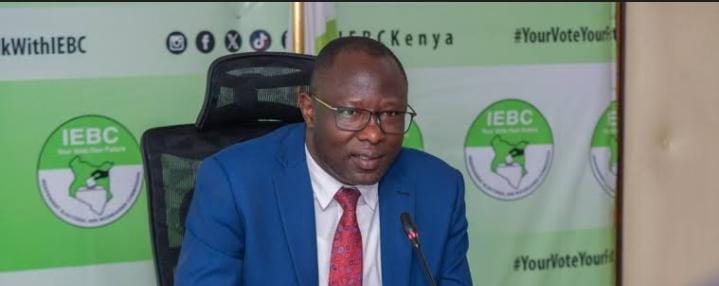
Presenting before the Committee on Justice and Legal Affairs of the National Assembly (JLAC) today, the figures were defended by IEBC Chairperson, Erastus Edung Ethekon, and the current Acting Chief Executive Officer, Moses Sunkuli, who claimed that the high price is a minimum to have a credible, transparent, and technology-driven exercise. The Commission has asked that the money be paid within three financial years to prevent the last-minute panic buying of the forms that marred past polls.
The budget also includes a huge allocation of about Ksh 7 billion for the purchase of new KIEMS (Kenya Integrated Election Management System) kits. The Commission pointed out that the purchased kits of 2017 have already expired their 10-year warranty and cease to be trusted. The units that will be retained will only be the 14,000 that were acquired in the 2022 election.
At the very top of the list of things that have captured attention in the proposal is the request that KSh 1.1 billion be spent on meals for the staff and security officers. Although the IEBC claims that these huge numbers of polling officials in 55,000 or more stations are a logistical requirement, the amount already draws passionate criticism on the side of taxpayers and legislators who worry about the growing national debt.
As indicated by Chairperson Ethekon, the costs are driven by a number of reasons, where IEBC anticipates registering 6.8 million new voters, many of them being members of the so-called Gen Z generation. The stations will go above 55,000 instead of 46,229 to cope with the high number of voters. They are also grappling with Ksh 3.8 billion in unpaid legal fees due to legal disputes in the past, which, according to them, have to be paid off in an attempt to hire external counsel in the year 2027.
As the National Assembly, under the leadership of Speaker Moses Wetangula, has shown its efforts in support of the well-funded IEBC, the Treasury would push towards smart budgeting and its possible cutbacks. The IEBC cautioned that the underfunding, especially in the 2026/27 window, would jeopardize the security and integrity of the system.