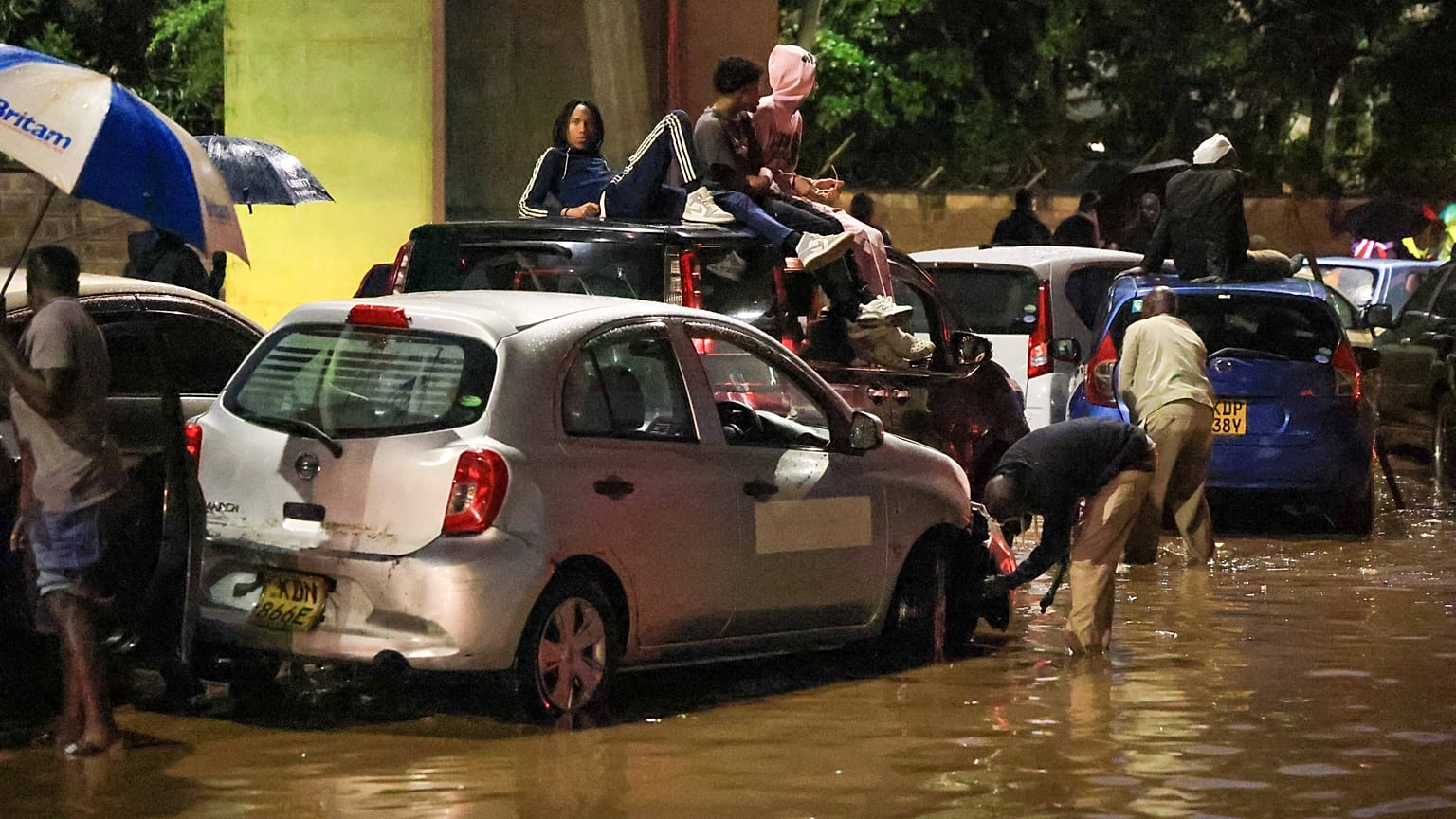
Heavy rains hit Nairobi, Kenya’s capital, bringing the city to a halt. With roads flooding fast, cars vanished under rising waters while people trudged through waist-high currents just to find safe ground.
Some people in Kenya saw what happened and shook their heads – hard to watch, yet expected. Heavy rains keep turning streets into rivers, again and again, especially in Nairobi. Things that used to feel out of the ordinary now just show up like clockwork.
In less than a day, rain filled Nairobi. Water poured faster than drains could handle, turning streets into rivers. Mombasa Road drowned first, then Uhuru Highway followed close behind, along with Mbagathi Way – each blocked by deep currents. Cars sat lifeless in soaked lanes while people waited, trapped inside. Hours passed before movement returned. Others left their vehicles behind, walking through floodwater to get clear.
Yet it wasn’t just about disruption. Lives vanished some pulled under by floodwaters, others struck down by live wires or falling walls when storms hit. When homes filled with water, help arrived in boots and uniforms, pulling families out from rising tides.
Out here, storms tell a story few wanted to believe. Life in Kenya shifts under new rules – ones drawn by heat, not hope. Nowhere in East Africa feels quite the same when it comes to rain and sun. Swings from long dry spells to sudden downpours have become common. Because heat is rising, experts say violent storms find easier paths here. Heavy floods follow more often than before, according to climate watchers.
Heavy rains hit harder because Nairobi’s layout worsens flooding. Many people now live near rivers, crowded into makeshift homes due to fast-growing numbers. When downpours come, water gets trapped – drains clogged, trash piles up, buildings block natural paths. Without space to drain, streets turn to streams, swelling damage across neighborhoods.
Floods often rush into houses in places like Pipeline, Embakasi, Kibra and Mathare when rain pours hard. Belongings vanish, homes collapse without warning. Floods hit again. This time, people wonder how many more years will Kenya pretend these are just accidents, not failures of planning?
Every year, floods hit like clockwork – no shock there. When rain pours down hard, some cities cope just fine. That strength comes from drains built to handle loads. Tougher buildings help too, standing up to rising water. Planning ahead makes space for nature to do its part.
Long-term planning should start now in Kenya. Flood safety starts with upgrading drains, bringing back natural wet areas that soak up overflow, holding firms to eco-rules, yet moving homes out of high-risk spots. Still, nations must weave climate readiness into their growth plans.