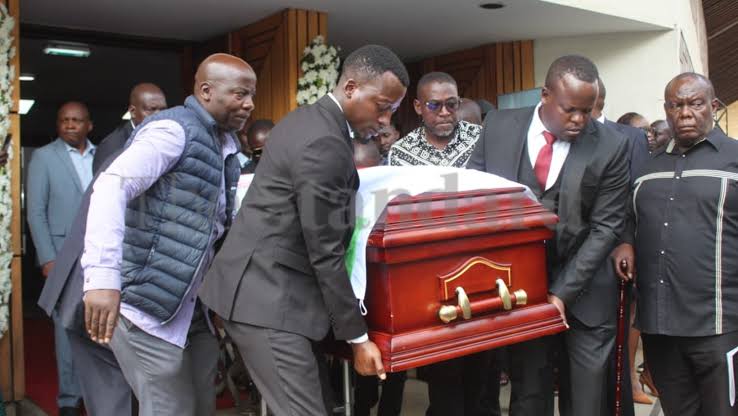
The burial of former Cabinet Minister and Lugari Member of Parliament Cyrus Jirongo was held on Tuesday, December 30, 2025, at his Lumakanda home in Kakamega County, drawing prominent leaders, family, friends and community members to pay their final respects.
Jirongo, aged 64, died on December 13, 2025, after his private vehicle was involved in a head-on collision with a passenger bus along the Nairobi–Nakuru Highway near Karai, Naivasha. Autopsy results confirmed that he succumbed to severe blunt force trauma sustained in the crash.
The burial procession began with his body arriving at his homestead following a series of funeral services and an overnight vigil held at his Kitale residence, where friends, relatives and well-wishers gathered to honour his life and legacy. Security was heightened ahead of the ceremony, with elders overseeing preparations for the final interment next to his parents and elder brother.
Among those in attendance were retired President Uhuru Kenyatta, Prime Cabinet Secretary Musalia Mudavadi, National Assembly Speaker Moses Wetang’ula, and other political leaders and community figures who spoke about Jirongo’s impact on Kenyan politics and society.
A notable moment during the burial was the performance of a traditional Luhya torch ritual, carried out by Senator Boni Khalwale alongside Isukuti drummers and cultural regalia. The use of the spotlight torch, a practice observed by some Tiriki and Luhya subgroups, symbolises a call for truth and justice in cases where the circumstances of death are contested. This gesture has sparked debate, with some defending it as cultural heritage while others argue it does not reflect mainstream Tiriki funerary practice.
The funeral also became a platform for renewed calls for a comprehensive investigation into the circumstances of Jirongo’s death. Former Vihiga Senator George Khaniri and other leaders claimed evidence suggests Jirongo may not have been alone in the vehicle before the crash and urged authorities to use CCTV analysis and other investigative tools to establish the truth.
In addition, Eugene Wamalwa, leader of the Democratic Action Party of Kenya, called for an independent and formal inquest, questioning inconsistencies in official statements and emphasising the need for clarity and accountability.
Throughout the event, tributes highlighted Jirongo’s long career in Kenyan politics, marked by both controversy and influence. He served in Parliament and as a Cabinet minister and remained a vocal figure in national affairs long after leaving elective office.